

新的一年總是想重新做人,你寫下的新年目標是什麼呢?
雖然 AI 可以翻譯了,但我還是很常許下「今年要學好英文」心願,然後歲末年初發現,嗯,毫無進展。
以前的我,總是卡在「不知道看什麼來學」或「練了沒人改」。
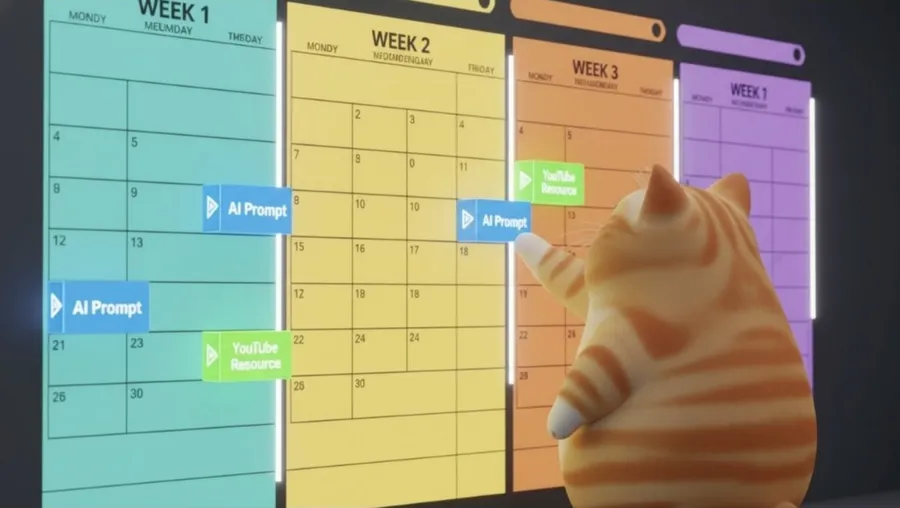
今年索性為了新年新希望,我運用 ChatGPT 的智慧體模式(Agent mode),配上一組 30 天技能養成計劃提示詞,只要輸入想學習的技能,AI 就能排出由淺到深的學習計劃表,搭配免費學習資源、實作小練習、不懂就問的 AI 指令。
免費自學、按表操課,還有人陪練,讚吧。
(補充:ChatGPT 在對話框點選「+」,選擇「智慧體模式」,比較能確認學習資源網址真的有效!不然很容易是 AI 亂掰的網址喔。)


AI自學核心概念是什麼?
1. 核心概念:AI 就是你的隨身教練
許多人在每年的開始都會許下宏願,例如「學好商業英文寫作」。但熱情往往在幾天後消退。這一次,我們嘗試將目標交給 AI。這套計畫的核心價值在於:
全方位資源: AI 能直接提供免費且高品質的學習資源。
實作導向: 不只讀理論,更有實作小專案。
陪練指令: 提供練習用的 AI 指令,讓你隨時有「人」對練。
2. 痛點解決:告別資訊焦慮,專注學習
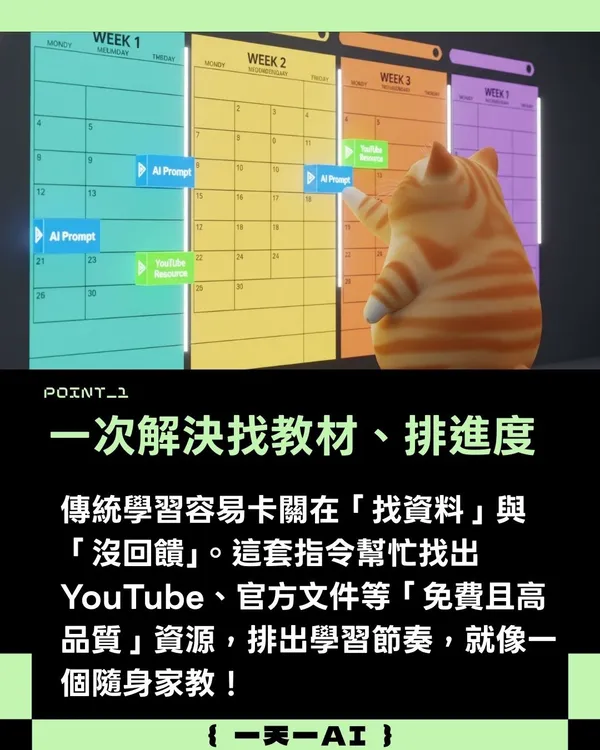
傳統自學最大的兩個門檻是 「找資料」 與 「沒回饋」。 你可能花了一半的時間在 Google 搜尋「最好的英文寫作教材」,結果找到一堆廣告或過時資訊;或者寫完了文章卻不知道自己錯在哪裡。
這套 AI 指令能一次解決這兩個問題:
自動篩選教材: AI 幫你找出 YouTube 優質頻道、官方白皮書或免費課程,就像一個經驗豐富的圖書館員。提醒:ChatGPT 在對話框點選「+」,選擇「智慧體模式」,比較能確認學習資源網址真的有效!不然很容易是 AI 亂掰的網址喔。
排定節奏: 像家教一樣幫你規劃好 Week 1 到 Week 4 的每日進度,你只需要「按表操課」。
3. 強調產出:即學即用,看見成果
許多人「學不會」是因為缺乏「應用場景」。這套方法的精髓在於交付物(deliverable) 的設計。
每週都有產出: 計畫不是讓你一直看書,而是設計每週都要有一個具體的成果(例如:寫出一封完整的客戶開發信、完成一份英文提案架構)。
AI 陪練指引: 當你不知道怎麼開始寫這個交付物時,AI 會提供指引(Hint),讓你邊做邊學,真正做到「即學即用」。

4. 循環優化:從基礎到進階的 4 週循環
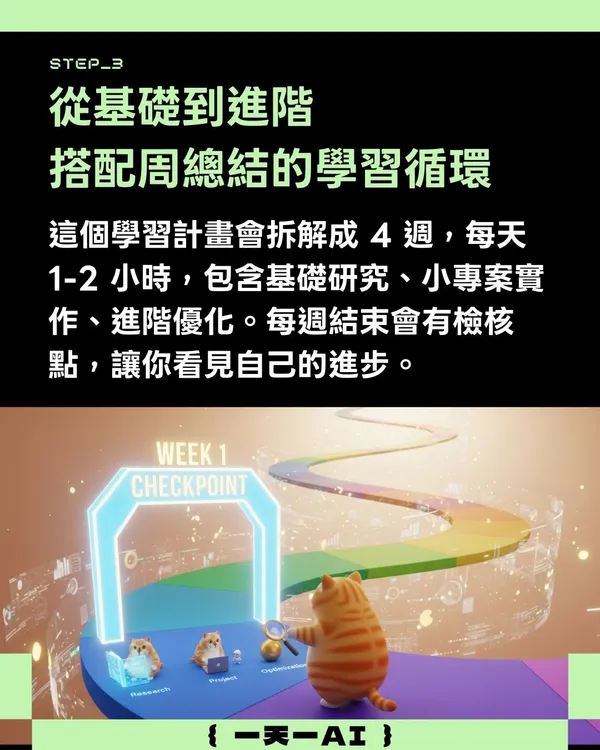
一個好的學習計畫必須有層次感。這套 AI 計畫將 30 天拆解為 4 週的學習循環,每天建議投入 1-2 小時:
基礎研究: 建立核心觀念。
小專案實作: 動手解決問題。
進階優化: 針對不足處進行修正。
週檢核點: 每週結束時進行回顧,讓你具體看見自己的進步幅度,建立成就感。
5. 極致客製化:把 AI 變成「你的」家教
最後,這套方法最強大的地方在於 「可複製性」 與 「客製化」。這套邏輯不只能用來學英文,也能用來學程式設計、行銷或任何技能。只要在提示詞(Prompt)中加入你的個人需求,產出的計畫就會完全貼合你的生活:
學習偏好: 你喜歡看影片、聽 Podcast 還是讀文章?
時間安排: 你是利用通勤時間(零碎時間)還是晚上(完整時段)學習?
每日時長: 你每天能撥出 30 分鐘還是 2 小時?
將這些參數加入 Prompt,AI 產出的就不再是罐頭計畫,而是為你量身訂做的個人課程。
如果你想收到更多AI技巧,也可以訂閱《一天一AI》日報,我每天都會分享一些容易上手的工具!

AI自學計畫提示詞
完整提示詞:
Create a 30-day plan to build a new skill, broken down into weekly goals and daily tasks. The plan should be clear, actionable, and progressive.Choose a specific skill and define what success looks like at the end of 30 days. 1. For each week (and preferably each day), recommend specific free learning resources, such as free online courses, YouTube tutorials, documentation, blogs, or interactive platforms. Each resource must include: -Title
-Platform (e.g., YouTube, official docs, etc.)
-Type (video, article, course, documentation)
-Short description of what it teaches
-URL2.About links:
- Do not invent, guess, or hallucinate URLs.
- If you are unsure about the exact URL, replace the URL with a search query in this format: Search: "<exact keywords the user should search on Google>"
- Prefer official sites and well-known platforms (Google Developers, YouTube official channels, GitHub repositories, etc.).
. For every day that includes hands-on implementation / project work (e.g., “實作”, “小專案”, “練習”, “應用”, “測試”, “除錯”, “優化”, “完成專案”) also include:
-How-to Resource (Free): 1–2 free resources that directly show how to build that exact task (official samples, codelabs, documentation pages, or step-by-step videos/articles). Include the same fields as above (Title, Platform, Type, Description, URL).
-AI Co-pilot Steps: Provide 3–5 bullet prompts the learner can paste into an AI assistant to complete the task. Each prompt should be specific and include context, expected output, and constraints. Use this format:
-Prompt to AI:
a.What to provide to AI (inputs/data/sample sheet structure)
b.Expected output (code + where to paste + how to run/test)
c.Common pitfalls to ask AI to watch for3.Add a “Deliverable” for each day: a concrete outcome that can be checked (e.g., “a script that cleans blank rows and logs results”, “a trigger that emails a daily summary at 9am”, “a README describing setup steps”).
4.Add a weekly section at the end of each week:
-Weekly checkpoint (what should work by now)
-Self-review questions (3 questions)
-Mini demo (how to demonstrate the week’s成果 in 2 minutes)The plan should follow this structure:
Week 1 – Foundation:
Days 1–3: Research basics (articles, videos, etc.)
Days 4–7: Start structured learning (online courses or books), 1–2 hours per day
Week 2 – Practice:
Days 8–10: Apply what you’ve learned in small projects
Days 11–14: Focus on challenging areas and seek feedback
Week 3 – Advanced Learning:
Days 15–17: Learn advanced techniques
Days 18–21: Apply in larger, more complex projects
Week 4 – Mastery:
Days 22–24: Refine skills through practice
Days 25–27: Identify and improve weak areas
Days 28–30: Complete and share a final project; reflect on progressMake sure all recommended resources are free and accessible.
Prioritize official documentation, official samples, and high-quality free tutorials.
Output in Traditional Chinese. Keep the same formatting style as the example output (with emojis, week headers, day-by-day breakdown, and resource blocks).
我想要學的是:(請自填)
訂閱《一天一AI》日報,每天都可以收到學習小技巧唷!